

The Art and Wisdom of Tea: Exploring Four Herbal Preparations for Mind, Body, and Balance
Introduction: Beyond the Simplicity of a Cup
At its simplest, tea is the union of dried botanicals and water. Yet, beneath this seemingly modest combination lies a sophisticated tradition shaped by centuries of observation, experimentation, and reverence for the natural world. Across cultures and generations, tea has represented far more than a comforting beverage; it has served as a ritual of contemplation, a symbol of hospitality, and a means of connecting with the healing potential of plants.
When we explore herbal tea through the lens of traditional herbalism, we discover that preparation is just as important as the plant itself. The temperature of the water, the duration of extraction, the part of the plant being used, and the chemical constituents we hope to preserve all influence the character and composition of the final infusion.
The true art of herbal tea lies not merely in selecting the right plant, but in understanding how to release its properties with intention.
Different botanical materials respond to different methods of preparation. Delicate flowers and aromatic leaves may require a gentle infusion, while dense roots and woody bark often benefit from prolonged simmering. Certain mucilage-rich herbs, meanwhile, are traditionally prepared in cool water to preserve their soothing texture.
In herbal practice, four principal preparation methods are particularly useful: the hot infusion, the decoction, the cold infusion, and the maceration. Each offers a distinct approach to extracting plant constituents and demonstrates an important principle of herbalism: the method must be suited to the material.
1. Hot Infusion: The Delicate Art of Steeping
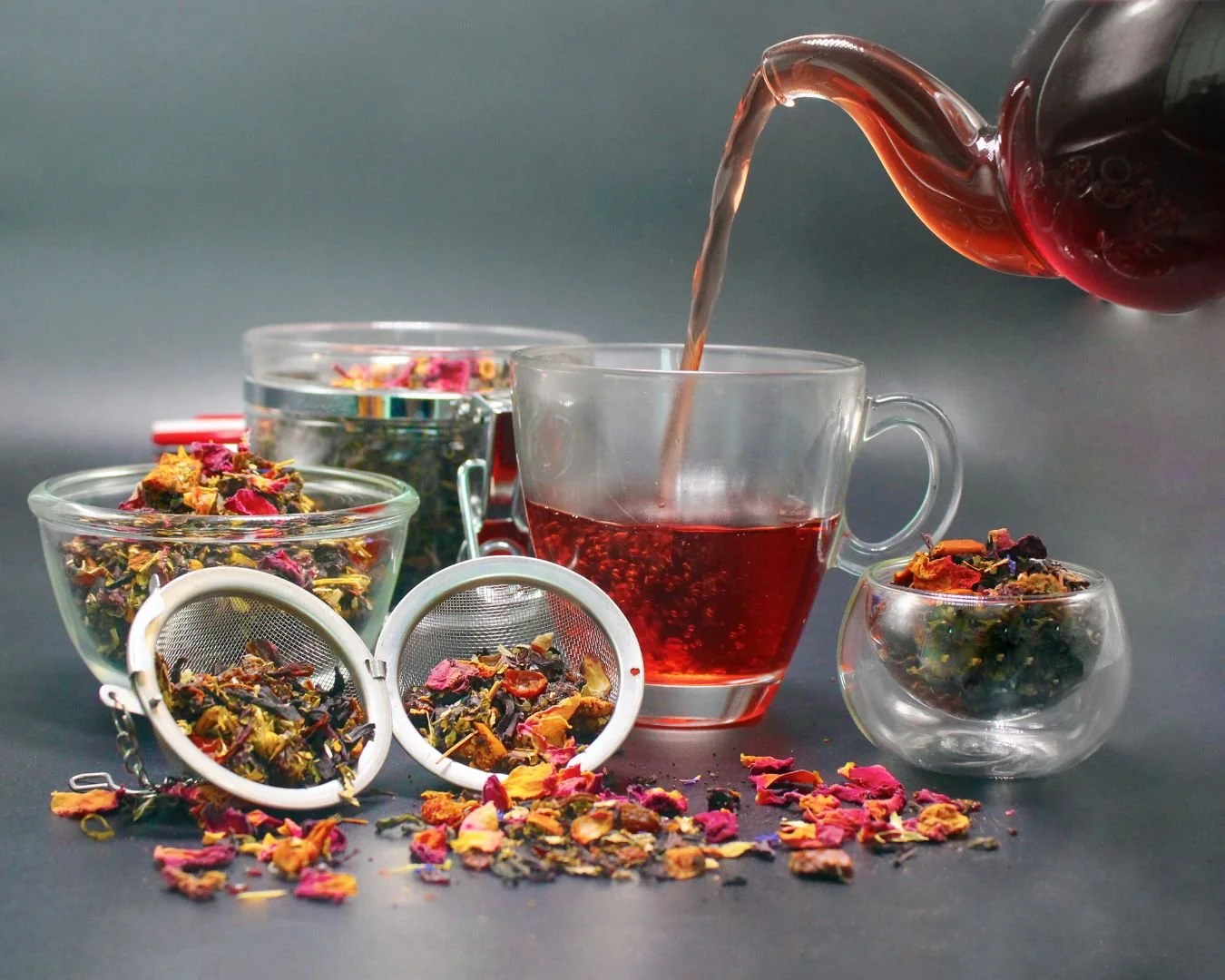
An infusion is perhaps the most familiar method of preparing herbal tea. It involves pouring hot water over plant material and allowing it to steep for a specific period, enabling water-soluble compounds, aromatic substances, and other constituents to pass into the liquid.
Although simple in appearance, an infusion is a study in balance. Excessive heat or prolonged steeping may diminish certain volatile aromatic compounds, while insufficient contact with water may result in a weaker extraction.
Which herbs are best suited to an infusion?
Hot infusions are generally appropriate for delicate plant parts, including leaves and flowers.
Common examples include:
Chamomile: Traditionally enjoyed for its calming qualities and as part of evening relaxation rituals.
Peppermint: Valued for its refreshing aroma and traditionally used to support digestive comfort.
Lemon balm: Appreciated for its gentle citrus fragrance and traditional use in relaxation.
Nettle leaf: Commonly prepared as a nourishing herbal beverage.
The philosophy of infusion
An infusion reminds us that not every beneficial process requires force. Some plants yield their character readily when given the appropriate conditions.
In much the same way, the art of attentive living often begins with creating space rather than exerting pressure. The covered cup becomes a quiet symbol of patience: a reminder that transformation frequently occurs beyond our immediate awareness.
A good infusion teaches us to be present, to observe, and to allow time to do its work.
2. Decoction: Drawing Wisdom from Roots and Bark
Where an infusion is suited to delicate botanical materials, a decoction is traditionally used for tougher plant parts that require sustained heat to release their constituents.
This method involves simmering plant material in water for a measured period. The prolonged application of heat facilitates the extraction of certain water-soluble compounds from dense roots, rhizomes, seeds, and woody bark.
Decoction is especially associated with traditional herbal systems in which roots and other robust plant materials have long held an important place.
Which herbs are best suited to a decoction?
Examples of botanicals commonly prepared through decoction include:
Ginger root: Used in warming beverages and traditionally associated with digestive comfort.
Cinnamon bark: Valued for its distinctive aroma and warming character.
Dandelion root: Traditionally used in herbal preparations associated with digestive and digestive-system support.
Liquorice root: Used in traditional herbal formulations, although it is unsuitable for some people because it can raise blood pressure and affect potassium levels.
The appropriate preparation depends on the species, the intended use, and the constituents being sought. Not every root or seed should automatically be boiled, and some botanicals require specific preparation or professional guidance.
Some traditional preparations require longer simmering times, while others are best prepared more gently. Always follow reliable botanical guidance rather than assuming that longer extraction necessarily produces a better result.
The philosophy of decoction
A decoction reveals a different dimension of patience. Unlike delicate leaves and flowers, dense roots often require sustained warmth before their constituents can be extracted effectively.
The process offers a metaphor for resilience: some forms of understanding emerge only after time, pressure, and sustained attention.
Yet, even here, wisdom lies in moderation. Heat must be appropriate, duration must be considered, and the character of the material must guide the method.
A decoction reminds us that depth often requires time, but that time is most valuable when guided by understanding.
3. Cold Infusion: The Quiet Intelligence of Cool Water
Not every herbal preparation benefits from hot water. Some plants contain delicate aromatic constituents, while others are rich in mucilage, a group of polysaccharides that absorb water and create a soft, slippery texture.
For certain herbs, cool or room-temperature water provides a useful alternative to heat-based extraction.
A cold infusion is prepared by immersing suitable plant material in cool water and allowing it to steep for an extended period. This gentler approach can help preserve a fresh flavour profile and extract water-soluble constituents without exposing them to high temperatures.
However, cold water does not extract every compound as effectively as hot water. The most appropriate method depends on the plant and the intended preparation.
Which herbs are suited to a cold infusion?
Examples include:
Marshmallow root: Traditionally prepared in cool water to extract its mucilage, which gives the liquid a soothing, slippery consistency.
Slippery elm inner bark: Used in traditional preparations for its mucilage content, subject to appropriate product guidance and professional advice.
Certain delicate aromatic herbs: These may be steeped in cool water when a lighter flavour is desired, although their extraction profile will differ from that of a hot infusion.
Marshmallow root is a particularly useful example of why preparation matters. Its mucilage-rich constituents can be extracted in cool water, creating a markedly different preparation from one made with boiling water.
Because water-based herbal preparations can support microbial growth, avoid leaving them at room temperature for prolonged periods. Refrigerate promptly and follow product-specific storage guidance.
Cold infusion introduces us to the possibility that gentleness can be a form of precision.
In a culture that frequently equates intensity with effectiveness, this method offers another perspective. Some botanical constituents are best approached without aggressive heat, and certain plant materials reveal their distinctive qualities through slower, cooler extraction.
The lesson is not that cold water is inherently superior to hot water, but that the most appropriate method depends on the nature of the material.
Sometimes, the wisest approach is not to apply more force, but to understand what the subject truly requires.
4. Maceration: The Slow Art of Extraction
Maceration is a broad preparation technique in which plant material is immersed in a liquid for an extended period to facilitate the transfer of selected constituents into that liquid.
Unlike the term cold infusion, which commonly describes an aqueous preparation made with cool water, maceration can involve different solvents, temperatures, and durations. In herbal practice, it may be used to prepare water-based extracts, oil infusions, or other botanical preparations.
The appropriate method depends on the plant, the desired constituents, and the intended use of the finished product.
Which plants are suited to maceration?
Examples include:
Calendula flowers: Commonly infused into suitable carrier oils for use in topical preparations.
St John's wort flowering tops: Traditionally used to prepare herbal oil extracts, although the plant has significant medication interactions when taken internally.
Marshmallow root: May be macerated in water to obtain a mucilage-rich preparation.
Selected aromatic botanicals: May be macerated in appropriate oils or other suitable solvents to obtain particular constituents.
It is important to distinguish between a water-based herbal maceration and an oil-based botanical infusion. They are not interchangeable, and their extraction properties, storage requirements, and safety considerations differ.
Oil-based macerations require a different process, including careful consideration of plant moisture, oil stability, and microbial safety. They should not be prepared by simply substituting oil for water in the method above.
The philosophy of maceration
Maceration is perhaps the clearest expression of slow transformation among these four methods. It allows time and contact to facilitate extraction without necessarily relying on sustained heat.
The process reflects an enduring principle found throughout nature: transformation does not always announce itself through visible movement. Sometimes, it unfolds gradually through sustained contact and changing conditions.
In this sense, maceration invites us to reconsider our relationship with time. Immediate results are not always the most meaningful, and patience becomes productive when it is accompanied by appropriate conditions and informed attention.
Maceration teaches us that meaningful transformation can emerge through time, contact, and the quiet unfolding of a process.
These methods are not simply four variations of the same recipe. They are distinct approaches to extraction, each shaped by the physical structure of the plant and the properties of its constituents.
Understanding their differences allows us to approach herbal preparation with greater care, consistency, and respect for botanical diversity.
Choosing the Right Preparation for the Right Purpose
The question is not merely which tea tastes best, but which preparation is appropriate for the botanical material being used.
A delicate flower may yield its aromatic character through a brief, covered infusion. A dense root may require simmering. A mucilage-rich plant may be better suited to cool-water extraction. A botanical intended for an oil-based topical preparation may require an entirely different method.
Several factors should guide the choice:
1. The plant part. Leaves, flowers, roots, bark, seeds, and fruits differ in structure and composition.
2. The constituents of interest. Volatile aromatic compounds, mucilage, and other water-soluble constituents respond differently to heat, time, and solvent.
3. The intended use. A pleasant everyday beverage is not necessarily equivalent to a preparation designed for a specific traditional herbal application.
4. Safety and quality. Correct identification, suitable sourcing, appropriate quantities, hygiene, and storage are essential. Natural origin does not guarantee safety, and some herbs interact with medicines or are unsuitable during pregnancy or for particular medical conditions.
5. The limitations of water extraction. Water is an effective solvent for many plant constituents, but it does not extract every compound. Some constituents require other solvents or specialised preparations, and a stronger-tasting tea does not necessarily contain more therapeutically relevant compounds.
Ultimately, a thoughtful herbal practice begins with knowledge rather than assumption. The goal is not to make every cup as strong as possible, but to prepare each plant in a manner appropriate to its properties and intended use.
Tea as A Practice of Mindfulness and Connection
Beyond its botanical properties, tea possesses a cultural and philosophical significance that extends across generations.
The act of preparing a cup creates a pause within the rhythm of daily life. Water is measured, leaves are selected, heat is applied or withheld, and time is allowed to pass. Each step invites attention to the present moment.
In many traditions, tea has been associated with hospitality, reflection, contemplation, and communal life. Its significance lies not solely in what it contains, but also in the experience it creates.
Herbal tea can therefore be approached on two complementary levels: as a botanical preparation whose composition depends on the principles of extraction, and as a ritual that encourages us to slow down and engage more consciously with our surroundings.
Neither perspective needs to diminish the other. Scientific understanding can deepen our appreciation of the plant, while philosophical reflection can enrich our experience of preparing and drinking it.
There is also a valuable lesson in recognising the diversity of plants themselves. No single method is universally appropriate, just as no single approach is sufficient for every situation. Knowledge grows when we learn to distinguish between materials, understand their needs, and respond accordingly.
Conclusion: The Wisdom Within a Cup
Herbal tea is far more than dried plants suspended in water. It is an intersection of botanical knowledge, traditional practice, careful preparation, and personal ritual.
The four methods explored here—infusion, decoction, cold infusion, and maceration—demonstrate that preparation is not a trivial detail. It is an essential part of understanding how plant constituents are extracted and how the final beverage or preparation takes shape.
A hot infusion teaches us the value of gentleness. A decoction reveals the importance of sustained effort. A cold infusion illustrates the precision of restraint. Maceration demonstrates the quiet role of time and contact.
Together, these methods offer a broader perspective on the relationship between nature and human understanding.
The most thoughtful cup of herbal tea is not necessarily the strongest, the most elaborate, or the most expensive. It is the one prepared with knowledge, care, and a clear understanding of the plant being used.
Perhaps this is the enduring wisdom of tea: that even an ordinary daily ritual can become an opportunity to cultivate attention, deepen our appreciation of the natural world, and recognise the value of choosing the right method for the right purpose.
For within every cup lies not only the character of a plant, but also the intention, understanding, and care with which it has been prepared.